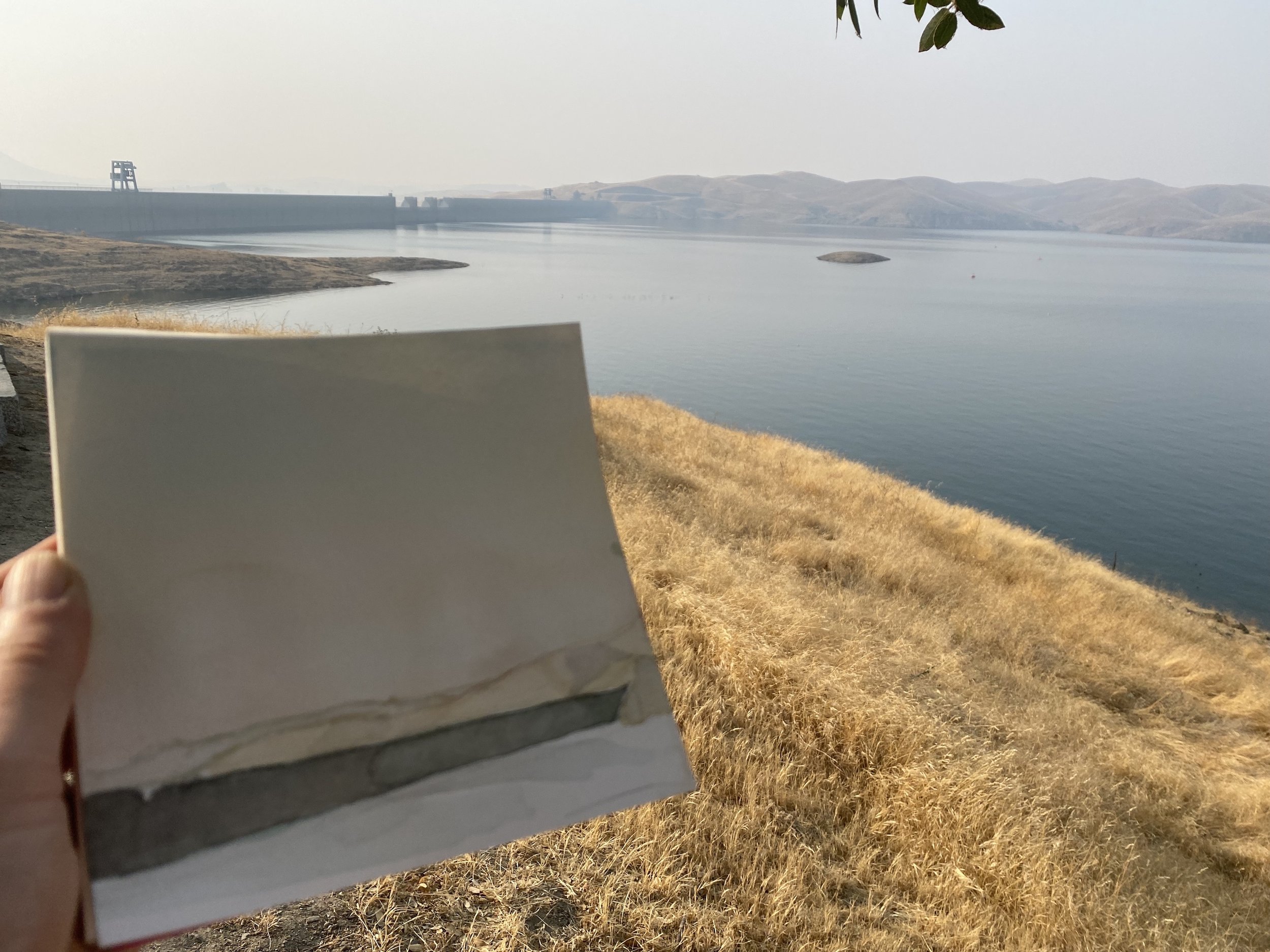
Photo: Hillary Mushkin
Groundwater
Focusing on the San Joaquin Valley in California’s Central Valley, Groundwater examines one of the most severely affected regions of groundwater pumping in the state. Shaped by a century of hydrological engineering, industrial agriculture and climate change, this landscape has been impacted more than any other in the Central Valley. The project traces these transformations through polyvocal narratives in drawing, video, and audio, entangling the visual language of scientific surveys with stories which situate the climate crisis as lived experience.
Further reading
“Groundwater”, an essay by Hillary Mushkin published in the exhibition catalog, From the Ground Up: Nurturing Diversity in Hostile Environments, edited by Irene Georgia Tsatsos


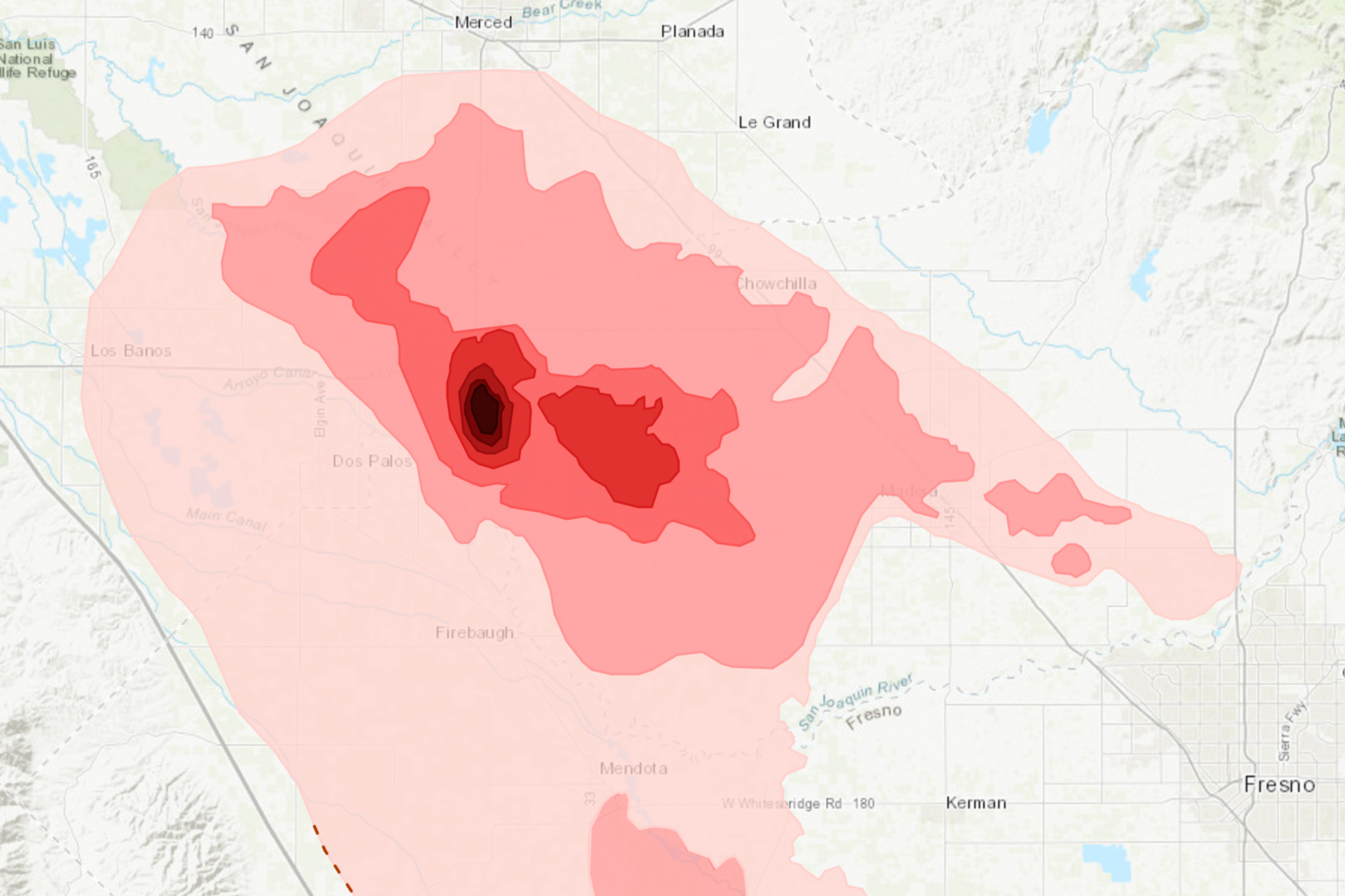
Left: Photos by Leonardo Pirondi; Right: Central Valley Subsidence Data, USGS Water Science Center
EL NIDO
In October of 2021, Incendiary Traces brought a team of artists, filmmakers, computer scientists, and a political scientist to meet activists in El Nido and Fairmead, farming communities within California’s San Joaquin Valley. According to the United States Geological Survey (USGS) data on land subsidence, these areas have experienced the most extreme sinking of land caused by the collapse of an underground aquifer due to groundwater extraction and other factors. While visiting the Merced National Wildlife Refuge and the Central Valley Project’s Friant Dam, which contains and diverts the San Joaquin River, the team sketched, photographed and recorded their observations on the ground.
Human perspectives
We interviewed local advocates Rosa Inguanzo, Angela Islas, and Vicki Ortiz, who are fighting to prioritize the human right to water for their severely impacted communities. Madeline Yancey, a park ranger, told us how the San Joaquin watershed was shaped throughout the year before industrial environmental interventions, such as when the forty-mile-wide river covered the valley floor each spring. These are the stories of the groundwater in context—human, environmental, legal, political, and historical.
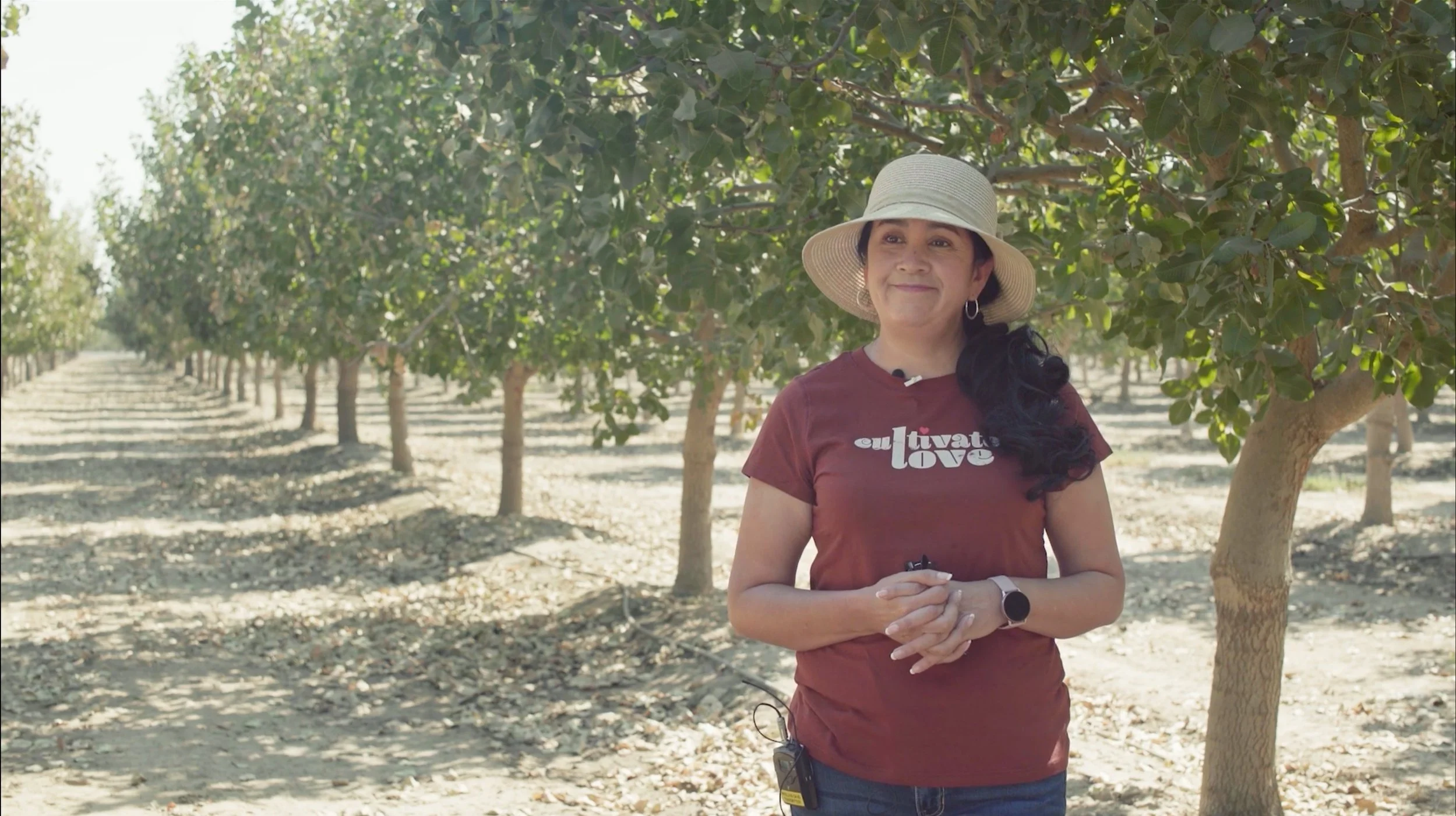
Groundwater, 2022: "El Nido" featuring Rosa Iguanzo; "Fairmead" featuring Vicki Ortiz; "Friant Dam" featuring Anglea Islas; "Merced National Wildlife Refuge" featuring Madeline Yancey; "An Offering" featuring Olivia Chumacero | Credits: Hillary Mushkin, Leonardo Pirondi, camera; Zazie Ray-Trapdo, sound; Heather Williams, interviews.
The River and the Grid
“The River and the Grid” is a large folio (26” h x 80” w) of 6 sequential drawings which depict the historical and modern impacts of groundwater pumping. Over a two-year period, a team of researchers including Hillary Mushkin, historian Brian Jacobson, Reggy Granovskiy, Oliver Tom and Annie Zeng collected and curated visual histories of the control of water in the San Joaquin Valley represented by maps, engineering diagrams, government surveys and other materials. Including some of these materials, the folio investigates the underlying historical conditions that contribute to the groundwater crisis.


Above: The River and the Grid sequential drawing folio, chapters 1-6; Below: details from The River and Grid | Photos: Evan Walsh.
INSTALLATION

“Groundwater” 4-channel video installation and “The River and the Grid” sequential drawing folio in Getty PST art exhibition “From the Ground Up: Nurturing Diversity in Hostile Environments,”, Armory Center for the Arts, Aug. 9, 2024- Feb. 23, 2025. | Photo: Yubo Dong
Special thanks to the Incendiary Traces survey team: Olivia Chumacero, Angela Islas, Steven Camacho Nunez, Jasmine Otto, Leonardo Pirondi, Zazie Ray-Trapido, Irene Georgia Tsatsos, Heather Williams. Preliminary research collaborators: Maggie Hendrie, Angela Islas, Jena Lee, Eddie Ocampo, Heather Williams. Summer Research Assistants: Isabelle Chaligne, Jeremy Yijie Chen, Evan Stalker, Shiny Shuan-Yi Wu. Data to Discovery is based at Caltech, the NASA Jet Propulsion Lab, and ArtCenter College of Design. Data to Discovery co-organizers: Scott Davidoff, Maggie Hendrie, and Santiago Lombeyda. NASA/JPL Earth Sciences section collaborators: J.T. Reager, Kyra Kim. Data Visualization Team: Noah Deutsch and Malika Khurana with contributions from Maalvika Bhat, Adam Coscia, and Jasmine Otto..